

20-09-2026
The effectiveness of biocontrol in codling moth management
Biocontrol
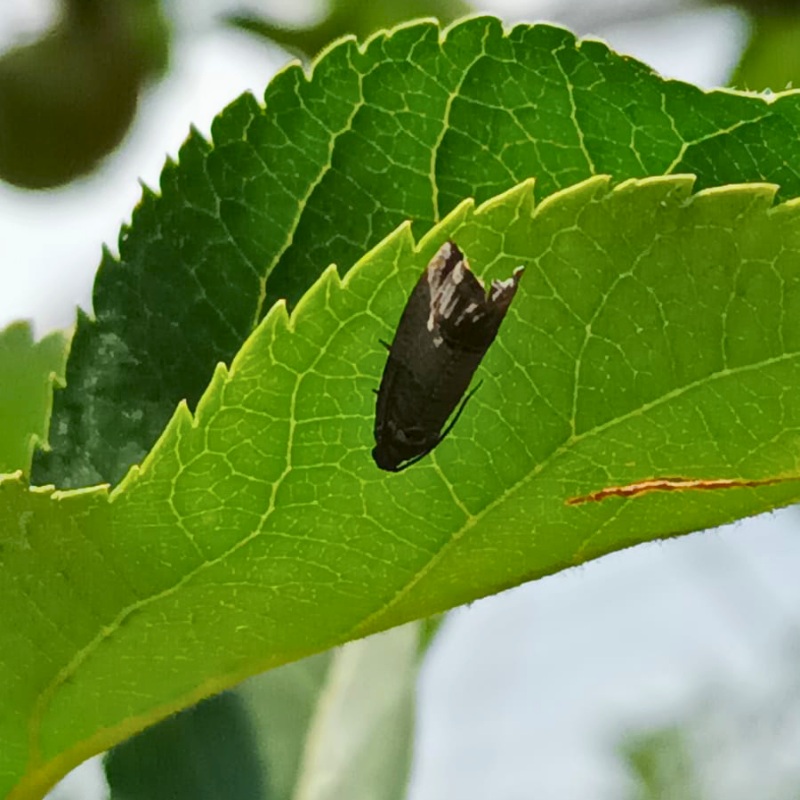
Three generations per year pose a constant threat to orchards: we are talking about Cydia pomonella, the codling moth. This lepidopteran attacks pome fruit, directly damaging the produce and causing substantial economic losses for agricultural businesses. Such strong biological continuity requires apple and pear growers to implement a rigorous management program throughout the entire growing season.
The strategy developed by Serbios is built on a deep understanding of the pest's bio-ecology, combining monitoring activities with targeted biocontrol tools designed to eliminate residues on harvested fruit and progressively reduce pest pressure over time.
Mating disruption and precision of forecasting models
Protection begins before egg laying. Thanks to our collaboration with GEA, the approach integrates mating disruption technology to minimize adult mating in the field, reducing the initial reproductive capacity.
Disrupting reproductive activity goes hand in hand with continuous flight tracking. Using Super Carpo traps baited with specific pheromones for Cydia pomonella allows growers to monitor population dynamics. Our technicians' expertise then comes into play, analyzing capture data using forecasting models based on degree-day calculations. This agrometeorological processing precisely pinpoints the exact timing of egg hatch, defining the optimal window for applying treatments.
Field biocontrol strategy
Controlling the codling moth requires the coordinated action of several defense tools:
- Monitoring and mating disruption: installation of Super Carpo traps to inhibit mating and track flight curves.
- Viral bioinsecticides: application of carpo 600 and carpostop®, formulated with Cydia pomonella Granulovirus, timed at the peak of egg hatching to target neonate larvae before they enter the fruit.
- Microbial bioinsecticides: applications of krystal vip WP and kristal 32® WG (based on Bacillus thuringiensis) upon reaching critical intervention thresholds.
The efficacy of granulovirus and Bacillus thuringiensis subsp. kurstaki formulations is closely tied to application precision and uniform canopy coverage. Since they act predominantly through ingestion, the product must be present on the fruit surface at the exact moment the first-instar larva begins feeding to enter the fruit.
Continuous implementation of this protocol over multiple seasons lowers the overwintering potential of the lepidopteran population present in the orchard. Shrinking the resident population reduces biological pressure year after year, enabling increasingly rational and sustainable orchard management.
-
Bioprotection
carpostop®

-
Bioprotection
carpo 600
-
Bioprotection
kristal 32® WG