

18-09-2026
Olive fruit fly defense strategies: preserving harvest quality and yield
Biocontrol
For many growers, controlling the olive fruit fly (Bactrocera oleae) begins in summer. Field experience has led us to shift this paradigm, pioneered by introducing early spring defense across Europe. Intervening as early as February and March means intercepting the insect as it emerges from diapause, reducing the initial population before it can damage the fruit.
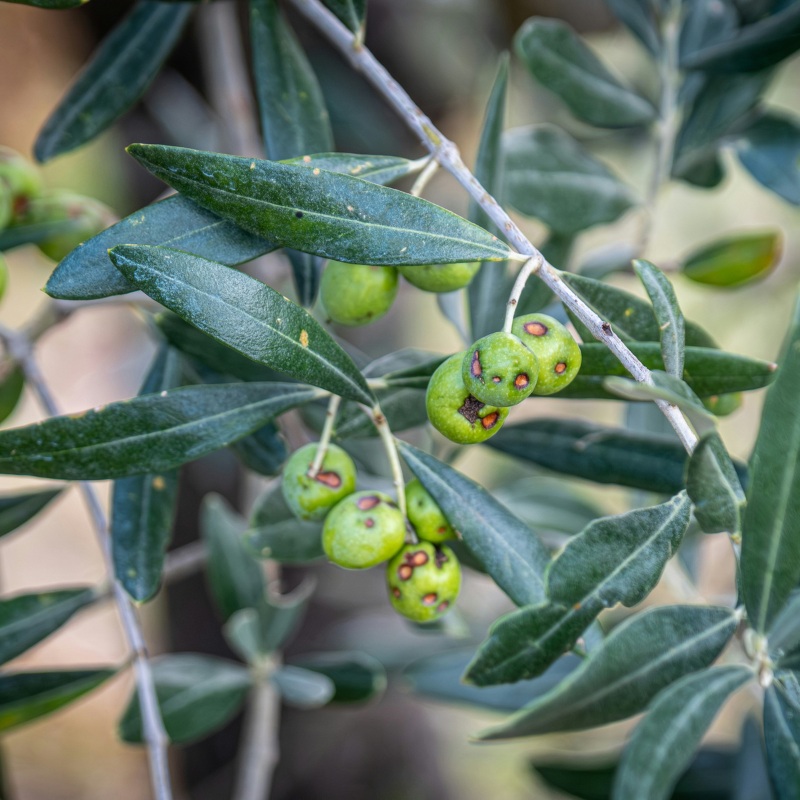
Waiting for early symptoms to appear between mid-June and early July during pit hardening represents a structural delay. By summer, larvae have already begun feeding on the pulp, causing a double loss: premature fruit drop and severe quality degradation. Milling affected fruit yields oil with high acidity, organoleptic defects, and irreversible oxidative processes.
The turning point lies in timing: shifting action to the beginning of the season, when the pest resumes its biological development and repopulates the olive grove. Intercepting adults at this stage stops the infestation at its onset, well before the olives become receptive for oviposition.
Pre-positioning and protective barrier
The Serbios method combines traps and bioprotection to ensure progressive coverage throughout the insect's life cycle:
- spring (February–March): early trap installation for mass trapping and the attract-and-kill strategy;
- early summer (June–July): application of surround® WP crop protectant based on calcined kaolin, which forms a protective film on the canopy and deters oviposition;
- summer: sampling 100 olives to detect damage and evaluate infestation trends.
Monitoring and late-season management
Visual field inspection guides every agronomic decision. If pest pressure increases during the season and exceeds the critical threshold of 5% infested olives, preventive measures must be complemented by a timely knock-down treatment.
In the final weeks before harvest, when pre-harvest intervals become a strict constraint, asset® five - a concentrated bioinsecticide based on natural pyrethrum with rapid contact action - can be applied to control residual adult populations. Its short 2-day pre-harvest interval secures the upcoming yield without leaving residues in the extracted oil.
-
Bioprotection
asset® five
