

27-09-2026
Greenhouse biocontrol: solutions for protected horticulture
Biocontrol
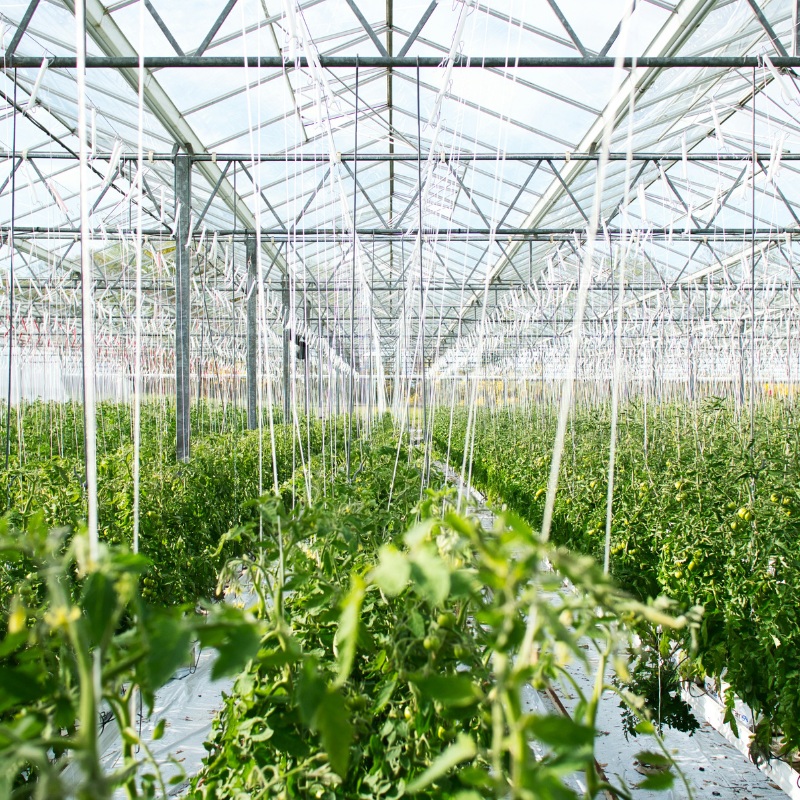
Greenhouses offer a protected microclimate that accelerates crop development and shortens production cycles. Characterised by stable temperatures, controlled humidity, and the absence of rainfall, this environmental stability also creates ideal conditions for pest proliferation.
Insects such as thrips, whiteflies, aphids, and mites complete biological cycles much faster, turning a few isolated individuals into a widespread infestation within days. Without the natural ecological balance provided by outdoor beneficial predators, growers must actively build and manage the protected ecosystem themselves.
Open field vs greenhouse: comparing two strategies
Phytosanitary management in greenhouses follows different rules than open-field cultivation. In open fields, conventional treatments are designed to provide long-lasting coverage and withstand rain wash-off; in greenhouses, synthetic chemistry is restricted to the earliest stages of the season, used exclusively for soil sanitation against soil-borne pests prior to planting.
Subsequently, traditional chemical formulations are heavily reduced or excluded entirely. Frequent harvesting and stringent retail chain specifications—which are far stricter for greenhouse vegetables than for open-field produce—make the use of molecules with long pre-harvest intervals unviable.
Greenhouse management relies heavily on combined nutritional and plant protection interventions using zero-residue products that safeguard consumer health and ensure crop marketability.
The Serbios synergy: monitoring, macrorganisms, and bioinsecticides
Serbios' approach to crop protection combines monitoring and biocontrol to achieve maximum efficacy:
- Chromotropic and monitoring traps: installed right from transplanting, they intercept early flying adults and track population trends for thrips, whiteflies, and aphids.
- Release of beneficial insects and mites: introducing parasitoids and predators forms the backbone of greenhouse biological defense, targeting establishing pest colonies directly.
- Botanical bioinsecticides: formulations such as asset® five (5% natural pyrethrum) and neemik ten® (azadirachtin A) deliver rapid knock-down action.
- Microbial insecticides: formulations based on entomopathogenic fungi such as Lalguard M52 OD.
Integrating these defense strategies with plant nutrition products, such as specific-action biostimulants, also helps maintain crop responsiveness and alleviates heat stress inside the greenhouse.
-
Bioprotection
neemik ten®

-
Bioprotection
asset® five