

20-09-2026
Brown marmorated stink bug defense strategy: preventing orchard infestations
Biocontrol
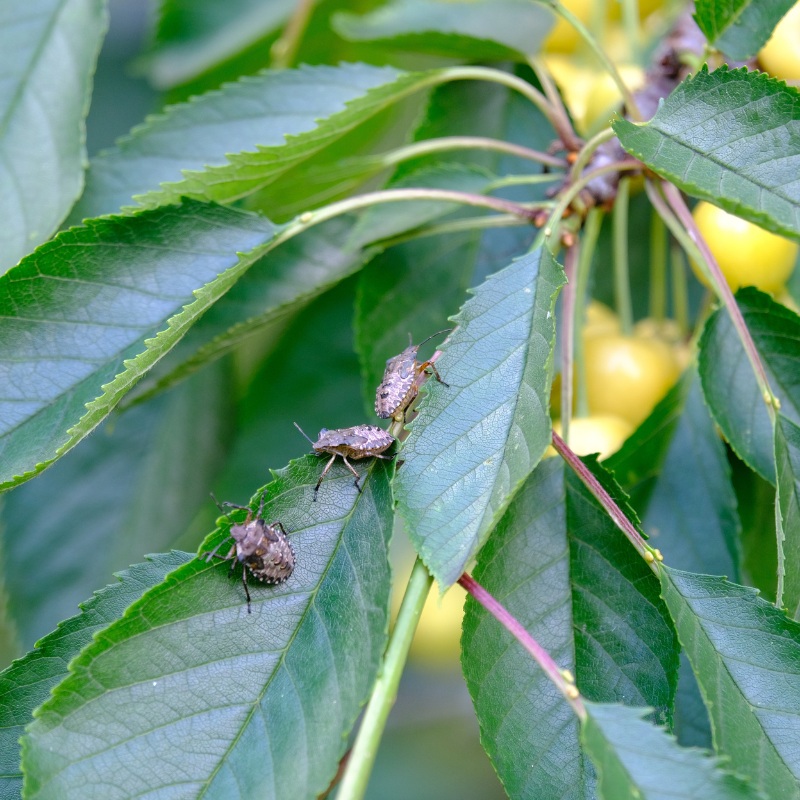
The brown marmorated stink bug (Halyomorpha halys) is an insect characterised by high mobility, marked polyphagy, and strong adaptability. It continuously attacks fruit crops, showing a preference for pome and stone fruits, but also affecting grapevines, persimmons, figs, and vegetable species. Feeding punctures—caused by injecting cytotoxic saliva into plant tissues—lead to deformations, necrosis, pulp suberisation, and premature fruit drop. This damage completely destroys product marketability for both fresh consumption and industrial processing.
The challenge in controlling this pest lies in its overwintering behavior. During cold months, adults seek shelter in building crevices and rural structures. As spring temperatures rise, individuals settle first on wild vegetation and subsequently move into cultivated fields. Relying exclusively on insecticides within the orchard often proves ineffective: populations present in peripheral areas render product coverage useless.
Designing the Totem Trap for mass trapping
Controlling a pest with strong migratory habits requires stopping it at the entry point before the population settles in the orchard. Serbios was the first company to apply the concept of mass trapping against Halyomorpha halys. This strategy stems from direct field development, initiated in collaboration with a grower from Verona and refined over time to create a complete capture kit for the brown marmorated stink bug.
The operational goal is to establish an attractive capture barrier along crop borders. Placing traps on the outer edges of the orchard—adjacent to hedges, buildings, perimeter vegetation, and uncultivated areas—intercepts overwintering adults during their movement toward the crop. This preventive barrier reduces the infestation potential by 30% to 50% before pests enter the crop rows, lowering biological pressure within the field and optimizing the efficacy of subsequent treatments.
Integrated control plan: from perimeter to crop row
In the absence of native natural enemies capable of independently keeping pest populations in check, defense must rely on an integrated, sequential strategy:
- Spring (overwintering): placement of the Totem trap with black or yellow roll and pheromones along the outer borders of the orchard for mass trapping and initial pressure suppression.
- Growing season (monitoring): replacement of the Halys trap (pheromone) on the trap positioned at the orchard margin to detect residual pest presence, monitor flight trends, and determine intervention thresholds.
- Peak phases and pre-harvest: targeted application of asset® five, a bioinsecticide based on natural pyrethrin with rapid contact knock-down action, to manage adult populations prior to harvest.
Using asset® five allows for precise intervention during the most sensitive phenological stages, ensuring rapid knock-down of mobile forms while observing pre-harvest intervals close to picking. Orchard protection demands rigorous planning based on border area control and continuous field monitoring.
-
Bioprotection
asset® five

-
Monitoring
Roll giallo/nero
-
Monitoring
Totem trap